Votre panier est vide.

Le GovTech entre dans une nouvelle ère
02 Jul
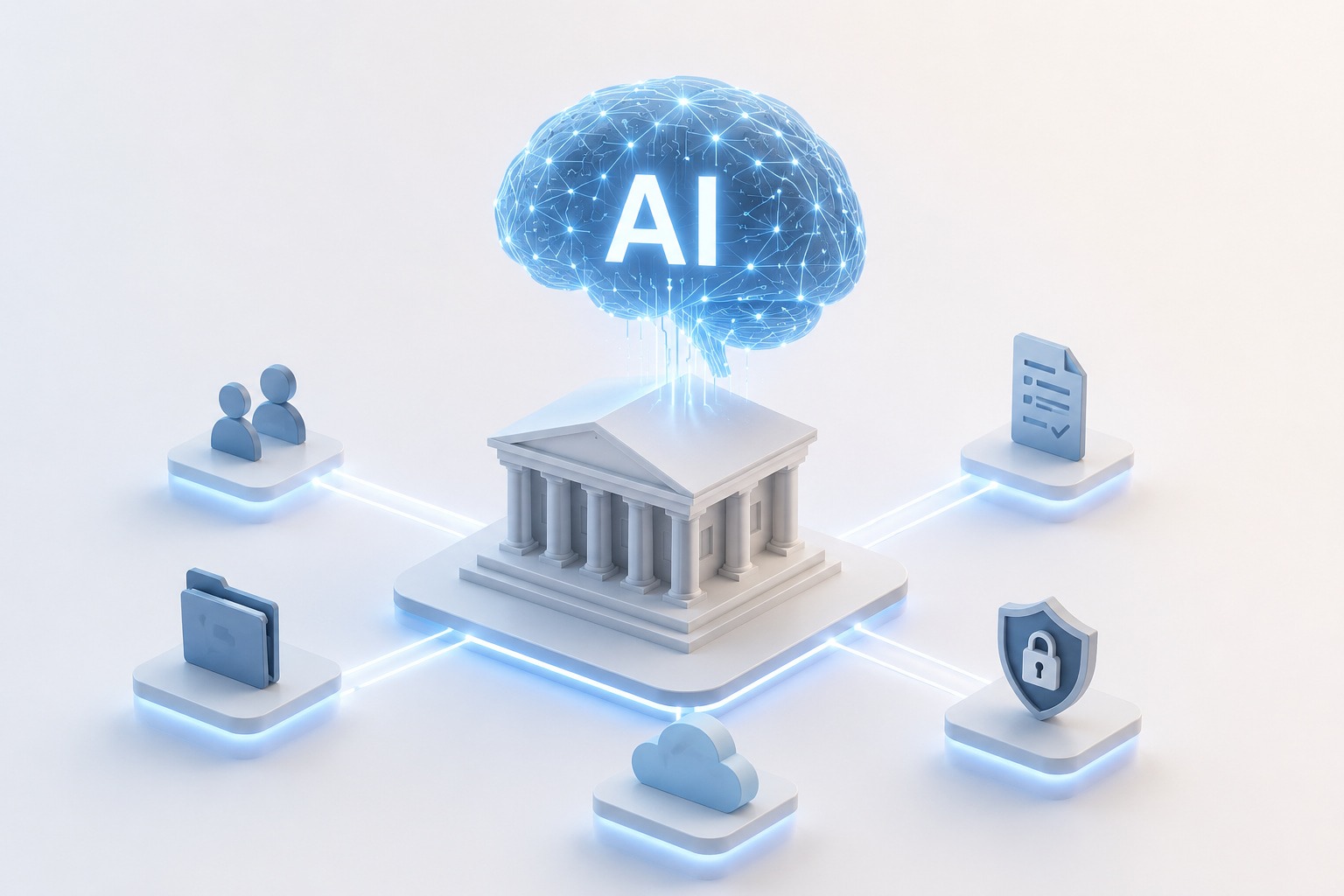
Depuis plus de dix ans, l’objectif principal du GovTech était clair : numériser les services publics.
Les démarches en ligne, les documents électroniques et les plateformes numériques ont profondément transformé les interactions entre les citoyens, les entreprises et les administrations. Cette première étape a marqué un tournant majeur dans la modernisation du secteur public.
Aujourd’hui, les enjeux ont évolué.
Il ne s’agit plus simplement de proposer des services en ligne. L’objectif est désormais de concevoir des systèmes capables de communiquer entre eux, d’automatiser des processus complexes et d’exploiter intelligemment les données afin d’offrir des services publics plus rapides, plus fiables et plus performants.
C’est cette évolution qui marque la nouvelle ère du GovTech.
Des plateformes indépendantes vers des écosystèmes connectés
Les services publics modernes ne sont plus développés comme des applications isolées.
Ils s’intègrent désormais dans un écosystème où plusieurs systèmes échangent des données en temps réel grâce aux API, aux plateformes d’interopérabilité et aux architectures logicielles intégrées.
Lorsque l’identité numérique, les registres publics, les systèmes de paiement et les plateformes institutionnelles fonctionnent ensemble, les processus deviennent plus fluides et les interventions manuelles diminuent considérablement.
Dans ce modèle, les citoyens n’ont plus besoin de transmettre eux-mêmes les informations d’une administration à une autre.
Les systèmes s’en chargent automatiquement.
L’automatisation transforme les services publics
La nouvelle génération de plateformes GovTech va bien au-delà de la dématérialisation des formulaires.
Elle repose sur l’automatisation intelligente des processus.
Les moteurs de workflow, les règles métier, les validations automatiques et l’orchestration des processus réduisent les délais de traitement tout en supprimant de nombreuses tâches qui étaient auparavant réalisées manuellement.
Les résultats sont déjà visibles.
Des démarches qui nécessitaient autrefois plusieurs heures, voire plusieurs déplacements auprès des administrations, peuvent désormais être réalisées en quelques minutes grâce à des systèmes intégrés et automatisés.
L’intelligence artificielle ouvre un nouveau chapitre du GovTech
L’intelligence artificielle ne se limite pas aux chatbots ou aux assistants virtuels.
Dans le secteur public, elle est utilisée pour classer automatiquement des documents, analyser de grands volumes de données, assister la prise de décision, détecter des anomalies, automatiser les contrôles et optimiser les processus administratifs.
À mesure que ces technologies gagnent en maturité, les institutions peuvent consacrer davantage de temps aux décisions à forte valeur ajoutée, tandis que les tâches répétitives sont prises en charge par des systèmes intelligents.
L’intelligence artificielle ne remplace pas l’administration.
Elle la rend plus intelligente et plus efficace.
L’architecture est le fondement de toute plateforme GovTech
Derrière chaque plateforme GovTech moderne se trouve une architecture logicielle conçue pour garantir la montée en charge, la sécurité et la haute disponibilité.
Des millions de transactions, des milliers d’utilisateurs connectés simultanément et des échanges continus de données exigent des systèmes fiables, capables de fonctionner sans interruption.
L’interopérabilité, les infrastructures cloud, l’observabilité, la gouvernance des données et la cybersécurité ne sont plus des fonctionnalités complémentaires.
Ils constituent les piliers qui garantissent la qualité, la résilience et la pérennité des plateformes publiques modernes.
L’avenir repose sur des systèmes intelligents
La prochaine étape du GovTech ne sera plus évaluée au nombre de services disponibles en ligne.
Elle sera mesurée à la capacité des systèmes à collaborer, à automatiser les processus et à exploiter l’intelligence artificielle pour fournir des services publics toujours plus performants.
Les plateformes GovTech ne sont plus conçues comme des applications indépendantes.
Elles sont désormais pensées comme des écosystèmes interconnectés où l’identité numérique, le partage sécurisé des données, l’automatisation des processus et l’intelligence artificielle fonctionnent ensemble pour construire une administration plus moderne, plus agile et plus réactive.
Notre vision
Chez ALSoft, nous sommes convaincus que la prochaine génération de systèmes publics numériques reposera sur des architectures ouvertes, une automatisation intelligente et une intelligence artificielle capable d’aider les institutions à offrir des services toujours plus rapides, plus performants et plus efficaces.
Comme l’explique Ermal Beqiri, fondateur d’ALSoft :
« Aujourd’hui, nous ne parlons plus seulement de numérisation. Nous parlons de concevoir des systèmes plus intelligents, mieux connectés et capables d’évoluer avec les institutions qui les utilisent. C’est cette vision qui permettra au GovTech de créer une valeur durable sur le long terme. »
Le GovTech ne se limite plus à la transformation numérique. Il consiste à concevoir des systèmes intelligents qui rendent l’administration publique plus performante, plus connectée et prête à relever les défis de demain.