No products in the cart.

AI Does Not Replace Automation. It Takes It to the Next Level.
25 Jun
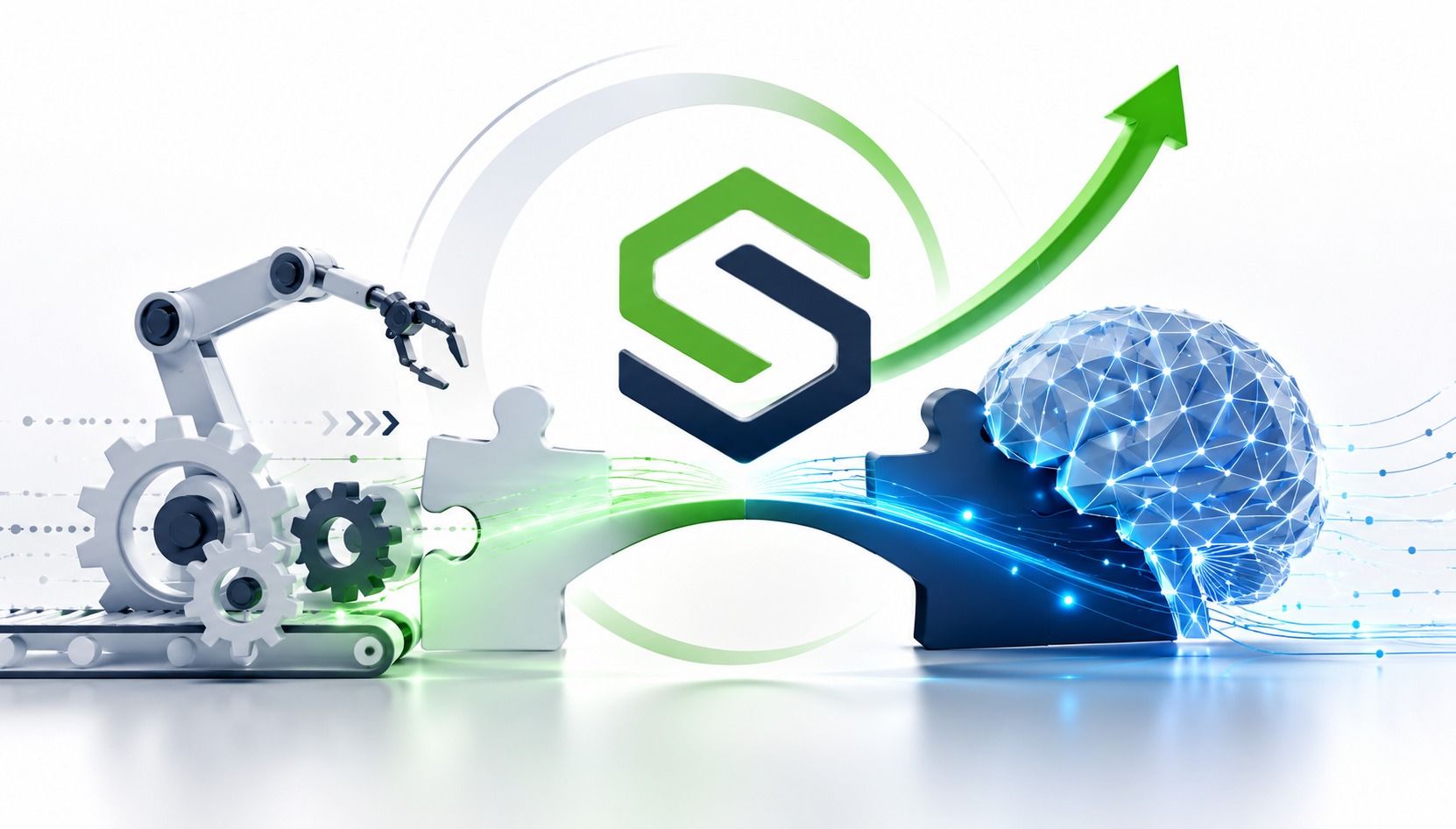
For years, organizations have invested in automation to eliminate manual work, accelerate processes, and reduce errors.
Today, a new technology is reshaping how businesses think about efficiency, productivity, and decision-making.
Artificial intelligence.
AI and automation are often mentioned in the same conversation, but they are not the same thing. Automation is designed to follow rules. Artificial intelligence is designed to analyze information, learn from data, and generate insights.
That is why the future is not about choosing one over the other. It is about combining both.
Automation Follows Rules
Automation operates on predefined logic. If A happens, the system performs B. If a condition is met, an action is triggered.
Payments, approvals, notifications, data exchanges between systems, and administrative workflows are all common examples of automation.
Its greatest strength is consistency. It does not forget. It does not get tired. It does not deviate from the process.
This is why automation has become one of the cornerstones of digital transformation.
AI Works with Uncertainty
Artificial intelligence becomes valuable when rules alone are no longer enough.
When thousands of documents need to be analyzed. When patterns must be identified. When recommendations need to be generated. When natural language must be understood. When future outcomes need to be predicted.
Unlike automation, AI does not rely solely on predefined rules.
It relies on data, probability, and the ability to learn from information.
Not Every Problem Requires AI
While artificial intelligence continues to dominate headlines, many organizations overlook an important reality:
Not every problem requires AI. In many cases, the greatest impact comes from automating processes that are still handled manually.
If a process is repetitive and governed by clear rules, automation is often the fastest, safest, and most effective solution.
AI creates the most value when it is built on top of processes that already work well.
The Future Is Combination
Modern systems will not be built on automation alone.
Nor will they rely solely on artificial intelligence. They will combine both. Automation will manage repetitive operations and routine workflows.
Artificial intelligence will support analysis, recommendations, forecasting, and decision-making.
This is why leading organizations are no longer asking whether they should invest in AI or automation.
They are asking how to make both work together.
The Smartest Technology Is the One That Creates the Most Value
At ALSoft, we have seen that digital transformation is not about adopting every new technology trend. It is about applying the right technology to the right challenge.
As Ermal Beqiri, founder of ALSoft, explains:
“For years, technology helped us automate what people do. Artificial intelligence is helping us understand what people cannot immediately see. The future is not about choosing between automation and AI. It is about combining both to create systems that not only act faster, but think smarter.”
In the end, artificial intelligence does not replace automation. It takes it to the next level.