No products in the cart.

AI as an Operational Layer: How Systems Are Becoming Adaptive in Real Time
04 May
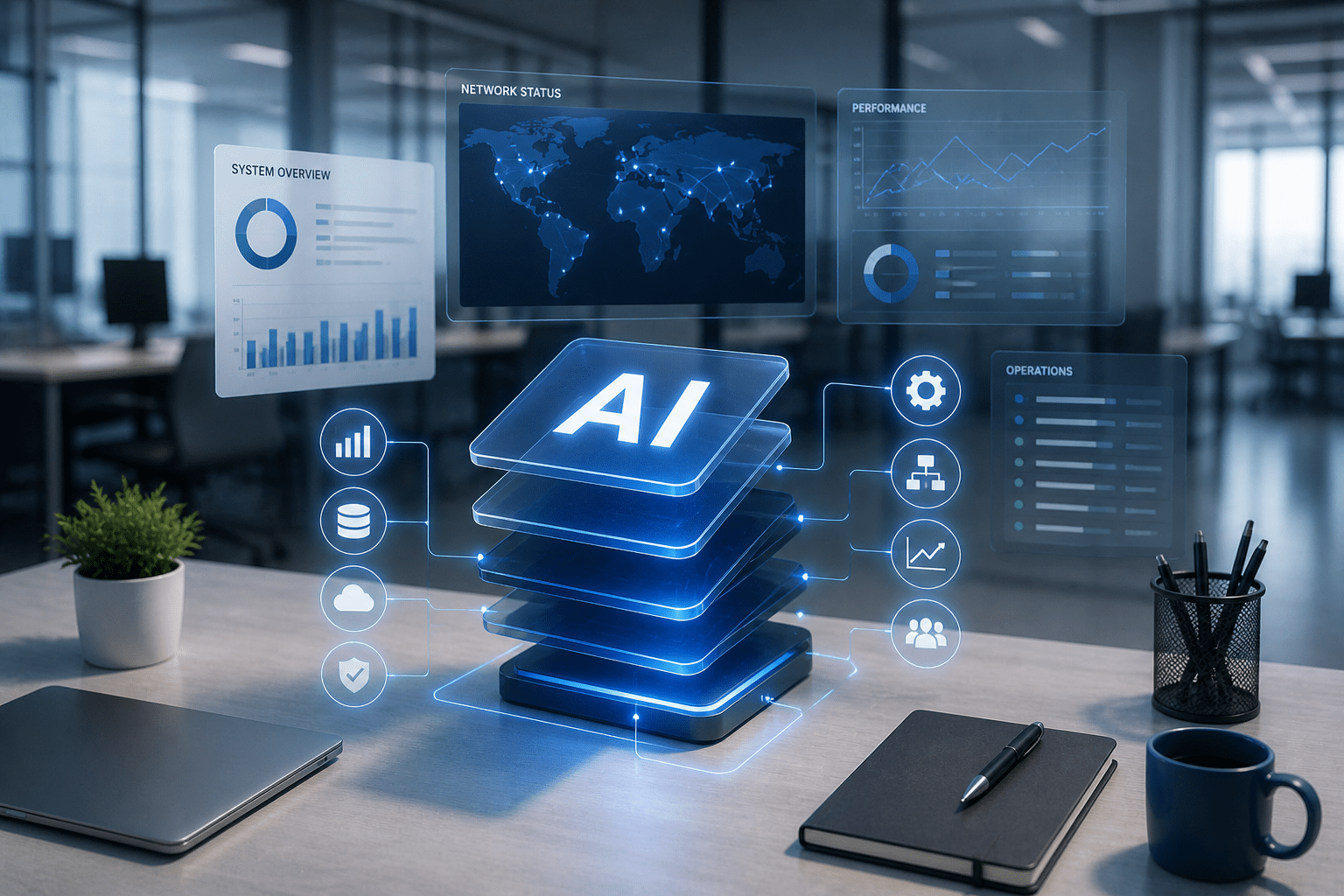
In modern system environments, the role of AI is no longer limited to adding new capabilities. It is increasingly shaping how systems behave in operation.
Traditionally, systems were built on predefined rules, where outcomes were controlled and predictable. With the integration of AI, this model is evolving. Systems are no longer only executing instructions. They are interpreting data and adapting their behavior in real time.
AI-driven adaptive systems
In operational environments where systems run continuously and handle complex interactions, AI introduces a layer that directly influences how systems respond.
It enables the identification of patterns, detection of anomalies, and continuous performance optimization based on real-time data.
This shifts operations from manual reaction to a model that is faster, more responsive, and better aligned with real-world conditions.
How operations are evolving in practice
One of the most significant changes is the integration of AI into decision-making processes.
Instead of relying solely on fixed logic, systems begin to consider context and can suggest or execute actions in real time.
This directly impacts how incidents are handled, how processes are prioritized, and how resources are optimized. At this level, the system is no longer just executing tasks. It becomes an active part of operations.
Control in AI-enabled systems
As systems become more adaptive, control becomes more critical.
Effective use of AI in operations requires transparency in decision-making, continuous monitoring of system behavior, and clearly defined operational boundaries.
These elements ensure that adaptability remains controlled and does not introduce unpredictability.
AI in critical system environments
Integrating AI into critical systems is not a theoretical exercise. It requires a clear understanding of how systems behave under real conditions and how every change affects stability.
As Ermal Beqiri, founder of ALSoft explains:
“We are seeing systems move from predictable structures to ones that adapt in real time. This creates new opportunities, but at the same time it requires more control and discipline in daily operations.”
AI is becoming part of how systems operate, not just an added capability.
The systems that will perform over time are not those that simply use AI, but those that integrate it while maintaining control, stability, and clarity in operation.