No products in the cart.

Digital System Stability: A Perspective from Ermal Beqiri on Long-Term Performance
14 Apr
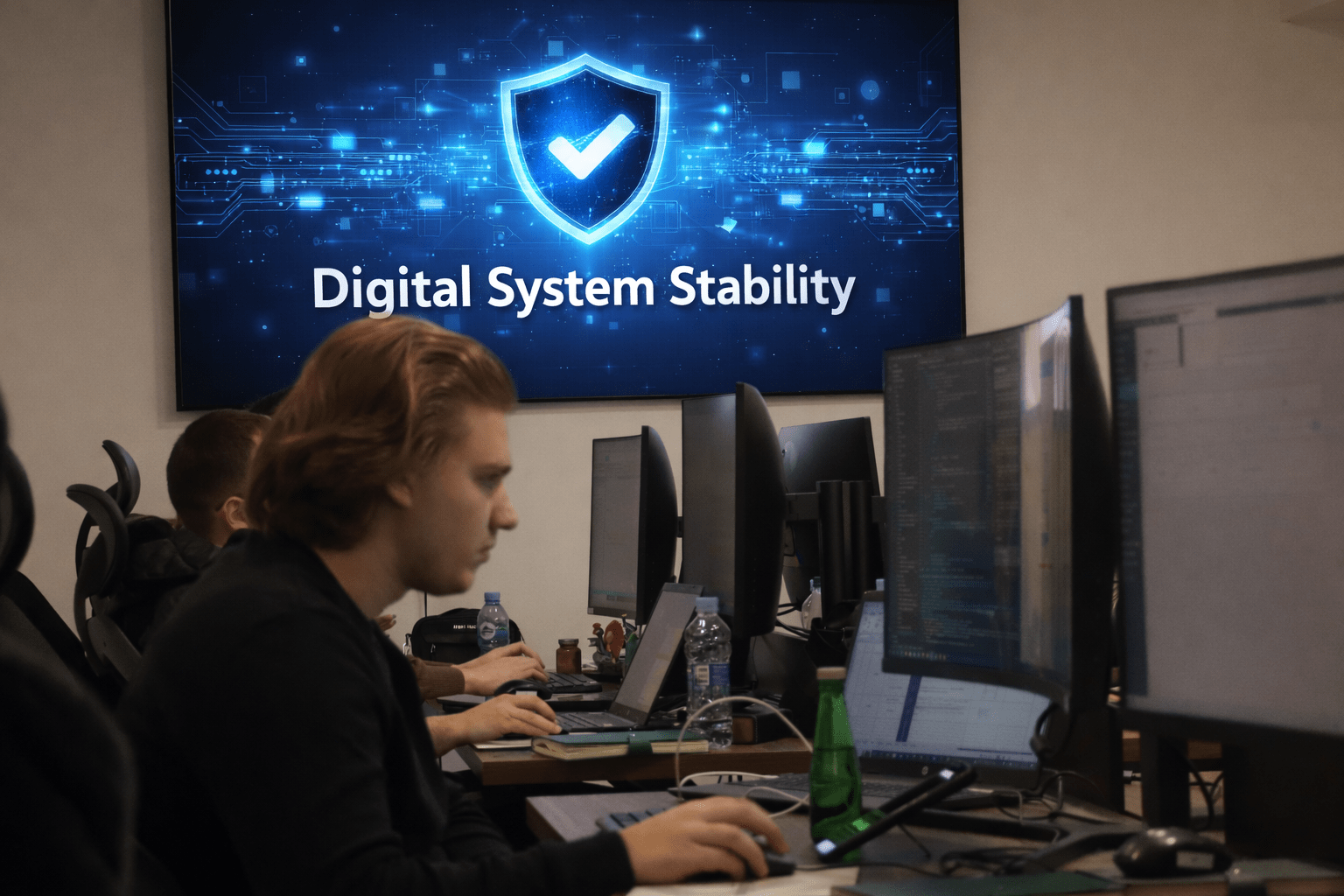
Digital System Stability: A Perspective from Ermal Beqiri on Long-Term Performance
In modern digital transformation initiatives, success is often associated with speed of delivery and the moment of go-live. In practice, however, the real value of a system is determined by how it performs over time. From the perspective of Ermal Beqiri, founder of ALSoft, systems that create lasting impact are those designed for long-term operation, not just rapid deployment.
At ALSoft, this perspective translates into a clear approach: systems must be structured to operate reliably in real conditions, where complexity, integrations, and continuous usage define performance.
Why delivery speed is not enough
In real-world environments, especially in high-usage and mission-critical systems, stability becomes a defining factor. A system that performs well at launch but degrades over time introduces operational complexity and long-term inefficiencies.
What makes stability critical in real environments
Systems are often designed with a strong focus on features and timelines, while operational readiness is treated as secondary. This creates a gap between what a system is designed to do and what it can sustain under real conditions.
Once in production, systems face unpredictable interactions, external dependencies, and continuous variations that cannot be fully replicated during development.
When a system works but is not stable
Digital systems operate within interconnected ecosystems. They do not function in isolation. Each integration adds complexity and introduces new dependencies.
Without clear control over these interactions, systems may remain functional, but lose consistency and reliability over time.
The role of operational control
Stability is not only a technical outcome, but an operational one. Monitoring, traceability, and clearly defined responsibilities are essential to maintaining control.
Without these elements, operations become reactive, and even well-designed systems begin to lose coherence.
The ALSoft approach to system stability
At ALSoft, stability is not treated as a post-deployment concern, but as a core design principle. Systems are structured to operate over time, maintain control over integrations, and support clear operational decision-making.
As emphasized by Ermal Beqiri, founder of ALSoft:
“Systems must be built with a clear structure of control and accountability from the start. Stability is not a result of the technology used, but of how the system is designed to function in operation.”
This approach is grounded in experience with high-usage systems, where continuity and reliability are not optional, but essential.
Why success is measured after go-live
Ultimately, the success of a system is not defined by its launch, but by its ability to remain stable over time. Organizations that prioritize operational structure and long-term performance build systems that are more reliable, more controllable, and more sustainable.
At ALSoft, digital transformation is understood as a long-term commitment, where systems must continue to perform under real conditions, not just at the moment of delivery.
This perspective is built on direct experience in high-usage environments, where stability and continuity are essential requirements.
Why success is measured after deployment
Ultimately, the success of a system is not defined by its launch, but by its ability to remain stable over time. Organizations that prioritize stability from the design phase build systems that are more reliable, more controllable, and more sustainable.
For ALSoft, digital transformation delivers real value only when it is supported by systems that perform consistently and reliably in the long term.