No products in the cart.

Updating Systems in Continuous Operation
07 May
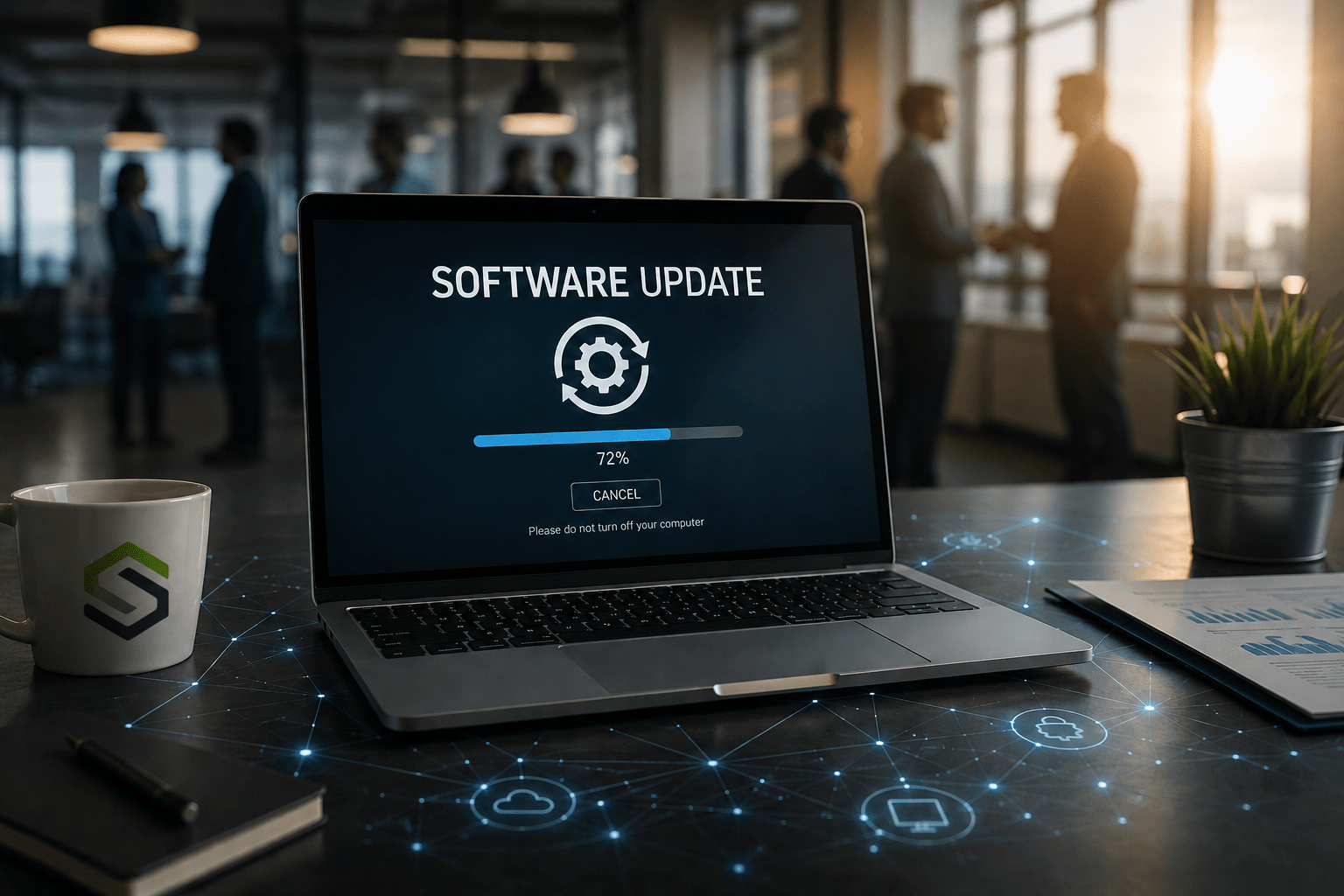
Systems that operate every day cannot be stopped every time they require updates, optimizations, or technical improvements. In environments with continuous usage, every intervention must happen while processes remain active and users continue interacting with the system in real time.
This makes operations significantly more complex than the initial system development itself. The real challenge is not only building a functional system, but maintaining stability while the system is continuously updated under real operational load.
When systems cannot stop
Systems operating continuously require ongoing optimization to maintain performance, security, and operational continuity.
Over time, increasing usage, new integrations, and expanding processes create constant demand for technical updates. These changes are not limited to adding new functionalities. They also involve performance optimization, load management, database improvements, and maintaining stability in operation.
In these environments, every update is implemented while processes remain active and usage continues without interruption. For this reason, the way changes are executed becomes just as important as the technical change itself.
Maintaining stability during change implementation
In continuously operating systems, stability is not maintained by avoiding change, but by controlling how change is implemented.
Every deployment, optimization, or integration must go through controlled processes of monitoring, testing, and validation to ensure that the system continues functioning without disrupting active usage.
This requires an operational structure where development, monitoring, and operational control function as part of the same workflow. At this level, systems are no longer treated as static products, but as structures that are continuously updated while remaining fully operational.
Architecture designed for long-term adaptability
Modern systems must be able to evolve without requiring complete interruptions or full structural rebuilds.
This allows systems to adapt to new operational requirements, growing usage, and increasingly complex processes while maintaining continuity in operation. In practice, this requires not only stable technical architecture, but also operational discipline in the way changes are managed over time.
Operations as part of the system itself
The more a system is used, the more critical operational control becomes. Every intervention must be traceable, every deviation must be identified immediately, and every optimization must be implemented without introducing uncertainty into the system.
In systems operating every day, stability is not created by avoiding change. It is created through the ability to evolve the system without losing control over it.
An operational model built for real-time environments
As Ermal Beqiri, founder of ALSoft, explains:
“Systems operating every day do not give you the luxury of stopping in order to make changes. Every optimization, update, and technical intervention must happen while the system continues running under real operational load. This is where the real difference is made between building a system and being able to operate it sustainably over time.”
The systems that sustain performance over time are the ones that can be continuously updated and optimized without interrupting operation. In the end, long-term stability is not defined by the absence of change, but by the ability to implement change while the system continues operating under real-world conditions every day.