No products in the cart.

Brain-Computer Interfaces: How Technology Is Enabling Direct Communication Between the Brain and Computers
30 Oct
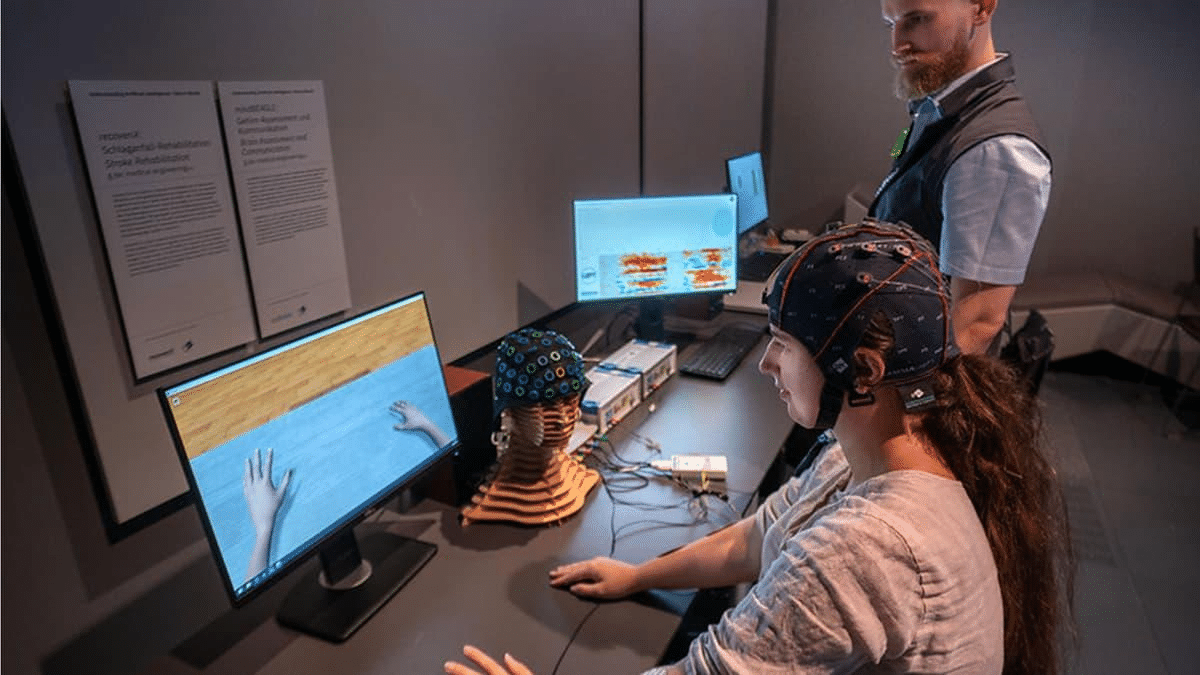
Technology is creating new ways for people to interact with computers. One of the most significant developments is the brain-computer interface (BCI), a system that analyses brain activity and translates it into digital commands. The aim is to establish a communication channel between the brain and external devices, reducing or, in some cases, removing the need for conventional physical input.
BCIs are being researched and developed particularly for medical and assistive applications. They may help some people with severe motor impairments communicate, control a cursor, or interact with selected devices. However, the technology is still evolving, and its capabilities depend on the system, the application, and the individual user.
For organisations following technological innovation, ALSoft sees brain-computer interfaces as an important example of how hardware, software, artificial intelligence, and scientific research can come together to create solutions with a direct impact on people’s lives.
How do brain-computer interfaces work?
A BCI system records brain activity through sensors. Some systems use non-invasive methods, such as electroencephalography (EEG), with sensors placed on the scalp. Others rely on implanted devices positioned closer to neurons, which can capture more detailed signals but involve additional medical considerations. The approach depends on the intended use, required precision, and clinical assessment.
The recorded signals are processed by algorithms that identify patterns associated with an intended action. The system then translates those patterns into commands that a computer or another device can interpret. In some applications, artificial intelligence helps analyse complex signals and adapt the system to the user over time.
Where is this technology being used?
One important area is assistive communication and rehabilitation. BCI systems are being studied to help people who have lost the ability to speak or move communicate through a digital interface. Depending on the system, brain signals may be used to select letters, control a cursor, or operate assistive equipment.
Researchers are also exploring BCI applications for prosthetic control, rehabilitation following neurological injuries, and interaction with virtual environments. These possibilities are promising, but many applications remain in research or clinical settings and are not yet widely available as everyday products.
The role of artificial intelligence in BCIs
AI can help analyse neural signals, recognise patterns, and adapt the interpretation process to an individual user. Machine-learning models may improve the system’s ability to recognise repeated signals, although performance can be affected by fatigue, movement, sensor quality, and differences between users.
Combining BCIs with AI may lead to interfaces that are more personalised and easier to use. Nevertheless, applications that affect a person’s health or safety require professional supervision, careful validation, and appropriate clinical and technical evidence.
Challenges: privacy, security, and ethics
Brain data is particularly sensitive because it may reveal information about neurological activity and, depending on the system, may be linked to personal or medical information. Its collection, storage, and use should be transparent, limited to a defined purpose, and protected through strong security measures.
Other important questions concern informed consent, data ownership, possible misuse, and accountability if a technical failure occurs. Implanted devices also require specific medical assessment and ongoing monitoring. Wider adoption will depend on clear standards and safeguards that protect individual autonomy and human dignity.
What can we expect in the coming years?
Progress in BCI technology will depend on improvements in sensors, signal-processing algorithms, data security, and device comfort. These developments may lead to more reliable systems that are better suited to everyday use. Adoption will also depend on clinical evidence, cost, regulation, and whether users find the technology practical and acceptable.
Conclusion: a new way to interact with technology
Brain-computer interfaces represent an important development in assistive technology and human-computer interaction. They may create new opportunities for communication and independence for people with certain impairments, but further research, testing, and strong privacy and security standards remain essential.
As Ermal Beqiri, founder of ALSoft, explains:
“Technology makes a meaningful difference when it gives people new ways to communicate, participate, and become more independent. Brain-computer interfaces show how innovation can expand human capabilities, provided that safety, privacy, and dignity remain central to their development.”
For businesses and organisations following this field, the practical approach is to understand both the potential and the current limitations of the technology. The future of BCIs will be shaped by collaboration between scientific research, engineering, healthcare, and responsible innovation.