No products in the cart.

The Infrastructure Behind Digital Government
24 Jun
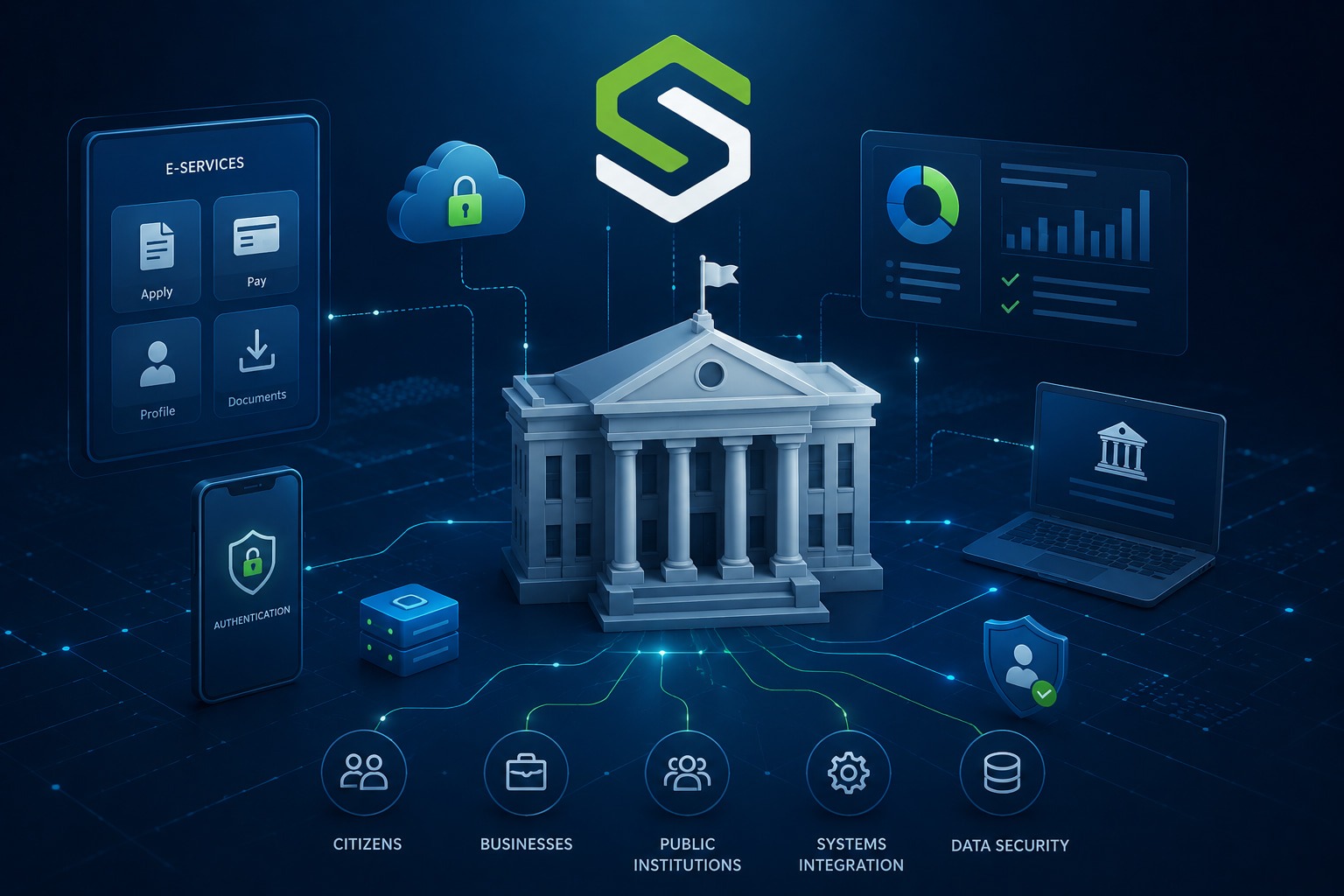
For most citizens, a digital service begins with a screen. An online application. A payment. A document downloaded in just a few clicks. The experience feels simple.
Yet behind every successful digital service stands a technology infrastructure far larger than what users ever see.
In reality, digital government is not built on applications alone. It is built on systems, integrations, data, and processes that must work together seamlessly every day.
A Service Never Operates Alone
When a citizen requests a document or accesses an online service, the system rarely relies on a single source of information.
In most cases, it communicates with multiple registries, databases, and platforms to verify identity, validate data, and generate the final result. For the user, the process takes only a few seconds.
Behind the scenes, dozens of processes run simultaneously to ensure accuracy, consistency, and reliability.
Interoperability Is the Foundation
One of the most important elements of digital government is the ability of systems to communicate with one another. When institutions operate as isolated silos, citizens are forced to move information from one office to another.
When systems are integrated, information can be exchanged securely and efficiently, reducing delays, paperwork, and unnecessary procedures. Digital transformation is not simply about digitizing existing forms. It is about creating an ecosystem where systems collaborate seamlessly.
Security and Reliability
As more public services move online, security becomes increasingly important. Digital government platforms manage critical information related to citizens, businesses, and public institutions.
For this reason, authentication, authorization, encryption, monitoring, and traceability must be embedded into the architecture from day one. Reliability is equally important.
A public service must be available every day for thousands or even hundreds of thousands of users. Achieving this requires resilient infrastructure, continuous monitoring, and systems capable of supporting growing demand over time.
The Technology Citizens Never See
The best digital services are often the ones that attract the least attention. Citizens do not think about databases, integrations, or infrastructure. They think about outcomes. Does the system work? Can I access the service I need? Can I trust it?
When the answer is yes, it means an entire technology infrastructure is doing its job behind the scenes.
Infrastructure Is the Foundation of Digital Transformation
At ALSoft, we have seen that the success of digital government is not defined solely by the applications citizens use. It is defined by the infrastructure behind them.
As Ermal Beqiri, founder of ALSoft, says:
“Technology becomes infrastructure when people begin to trust it. That is the moment when a system is no longer just software, but part of the functioning of a modern society.”
Digital government is not only about technology. It is about building secure, reliable, and sustainable systems that support the daily lives of citizens, businesses, and public institutions.