No products in the cart.

How Digital Transformation Is Reshaping Public Services
26 May
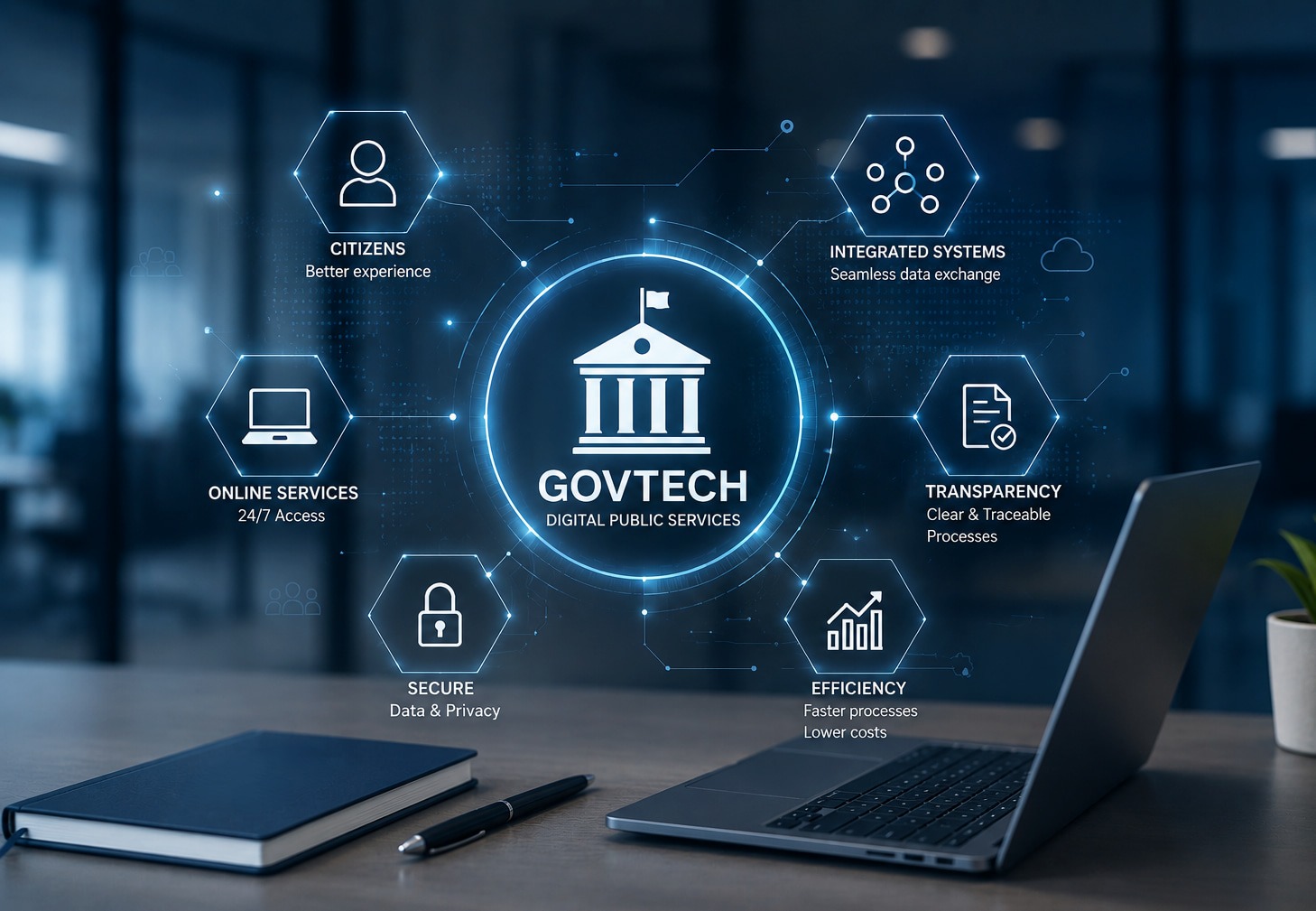
For many years, accessing public services often involved lengthy procedures, physical paperwork, and fragmented administrative processes. Citizens were required to visit multiple offices, submit documents repeatedly, and spend significant time navigating bureaucratic requirements.
The lack of integration between systems created delays, increased administrative costs, and limited access to information. For public institutions, this resulted in a greater reliance on manual processes and reduced operational efficiency.
How Digital Transformation Creates Change
Digital transformation is about much more than replacing paper with digital forms. It involves redesigning processes, connecting systems, and creating a more efficient experience for users.
Through online services, automated data exchange, and digital identification, many procedures that once required days or weeks can now be completed within minutes.
Technology enables information to move more efficiently across institutions, improves collaboration between organizations, and reduces barriers for citizens and businesses seeking access to services.
Measuring the Impact of Digital Transformation
The value of digital transformation is reflected in its practical results.
Shorter waiting times, improved process transparency, greater traceability, broader access to online services, and lower administrative costs are among the most visible outcomes.
When services become faster and easier to access, both public institutions and end users benefit. Citizens and businesses spend less time on administrative tasks and gain a smoother experience when interacting with public services.
Technology as an Ongoing Evolution
Digital transformation is not a one-time initiative. It is an ongoing process that requires continuous improvement, system integration, and adaptation to changing user expectations.
As digital services continue to evolve, it becomes increasingly important to build platforms that can scale, integrate with other systems, and support future needs.
Modern public services require technology infrastructures that are flexible, reliable, and capable of supporting long-term growth.
A Practical Approach to Modernization
As Ermal Beqiri, founder of ALSoft, explains:
“Today, people expect services to be fast, simple, and easy to access. Digital transformation has helped move public services from lengthy procedures to experiences that can often be completed in just a few clicks, making everyday interactions significantly easier.”
Digital transformation continues to reshape the way public services are delivered. By connecting systems, simplifying processes, and improving accessibility, technology plays a key role in helping institutions operate more efficiently while creating better experiences for citizens and businesses.