No products in the cart.

Trust Is Not Installed with an Update. It Is Built Over Time.
08 Jun
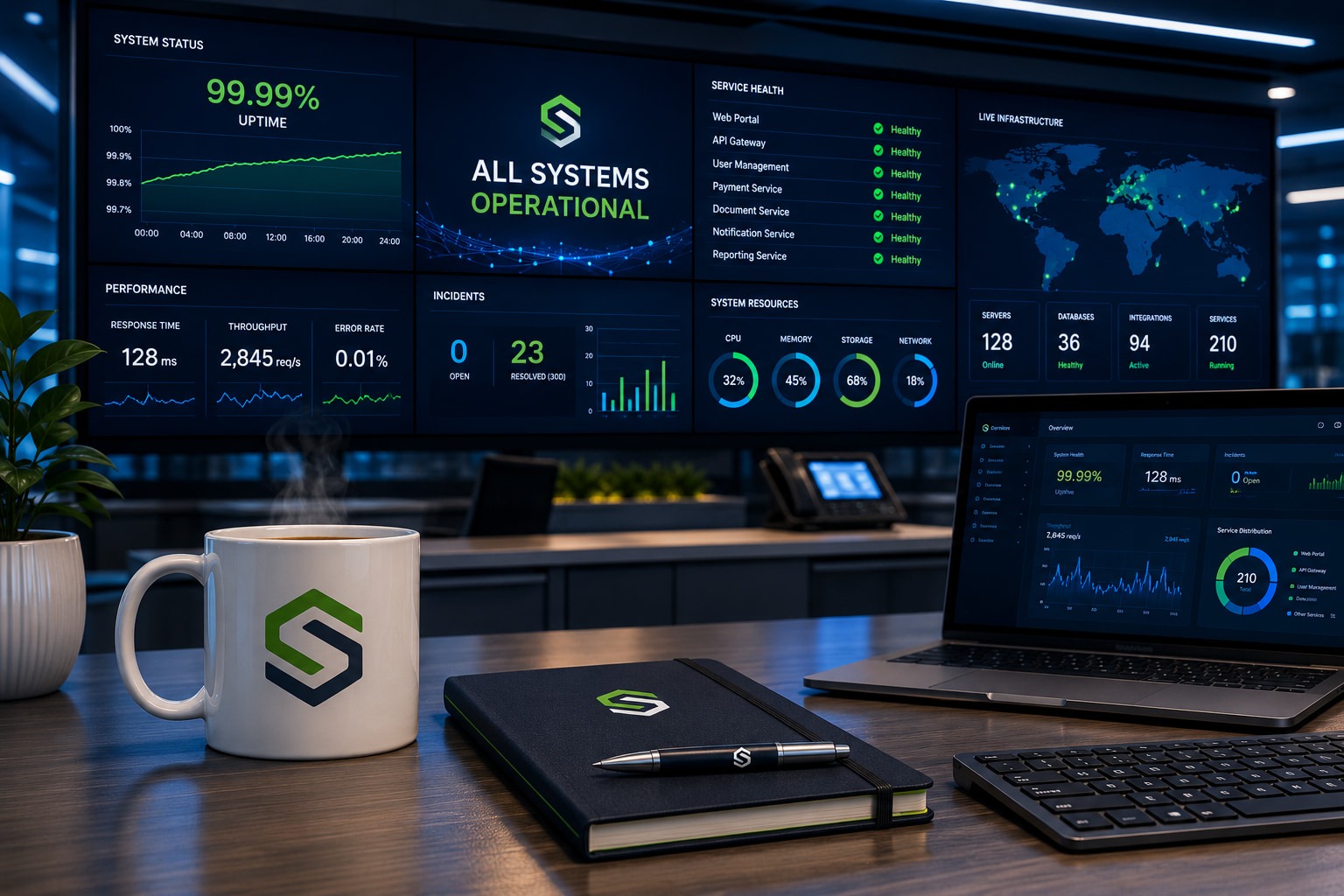
Many organizations consider deployment to be the most important milestone in the life of a system. In reality, users do not decide whether they trust a system on its first day. They decide after weeks, months, or even years of using it.
Trust is built when a citizen can access a service without obstacles. When a business can complete a process without interruption. When an institution can rely on a system to support its daily operations.
In that sense, trust is not the result of a successful launch. It is the result of thousands of successful interactions.
Reliability Is Not an Accident
Users do not analyze a system’s architecture. They do not see the monitoring, integrations, or operational processes running behind the scenes. What they notice is much simpler: does the system work when they need it?
Yet behind that simple experience lies continuous effort. Performance monitoring, incident management, updates, testing, and integration oversight all play a direct role in maintaining system reliability.
For users, these activities remain invisible. However, they are exactly what determine whether a system will remain dependable over time.
Users Remember Disruptions
When a system performs as expected, most people never think about it.
But it only takes a few minutes of downtime for the impact to become immediately noticeable. A process may remain incomplete. A payment may be delayed. A service may become unavailable. An integration may stop communicating with another system.
That is why stability is not measured only during periods when everything is working normally. It is also measured by the ability to detect issues early, respond quickly, and minimize their impact on users.
Technology Is Only Part of the Equation
Behind every reliable system are processes, monitoring practices, maintenance activities, and people working continuously to ensure everything functions as expected.
For this reason, trust is not built solely by the technology itself. It is built through the way that technology is operated, monitored, maintained, and improved over time.
This philosophy has been part of our approach for years. Because the value of a system is not measured only by what it can do, but by how consistently it can continue doing it day after day.
Trust Is Built Every Day
As Ermal Beqiri, founder of ALSoft, says:
“People do not trust a system because they are told to. They trust it because it continues to work when they need it. And that trust is built gradually, one day at a time.”
Users may never see the monitoring, maintenance, or operational processes that keep a system running. Yet those are precisely the elements that determine whether a system will be just as reliable tomorrow as it is today.