No products in the cart.

AI Agents in Cybersecurity: How Are They Changing Threat Detection and Automated Attacks?
19 Oct
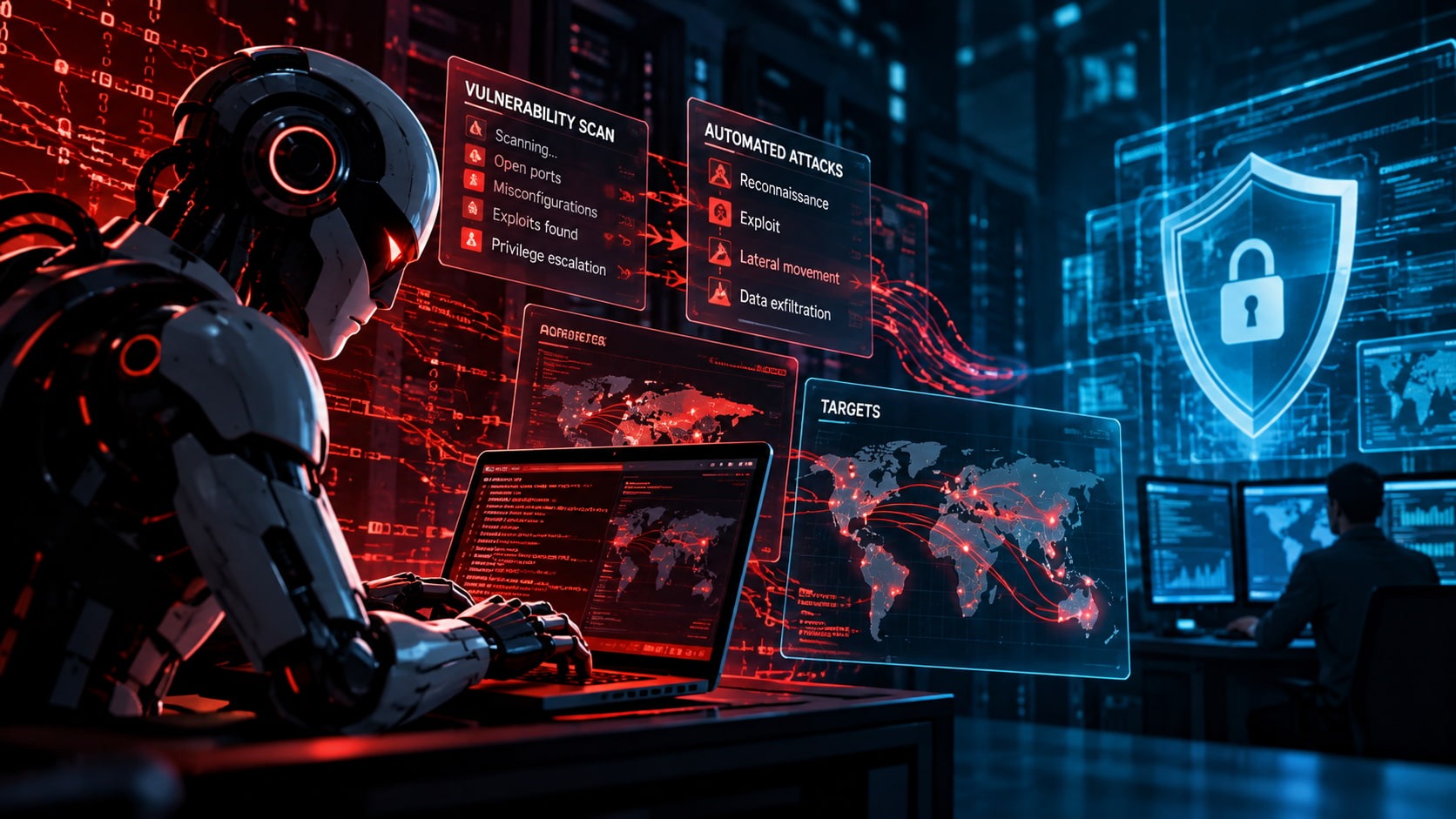
Many businesses are beginning to explore how artificial intelligence can support their cybersecurity processes, but not every organization fully understands what changes when AI tools become AI agents.
Traditional tools usually analyze information or respond to specific instructions. AI agents can carry out multiple connected steps toward a goal, such as reviewing signals, gathering relevant context, and recommending or initiating actions within defined limits.
These capabilities can help security teams manage growing volumes of alerts and respond more quickly. At the same time, similar automation may be misused by attackers to increase the speed, scale, or personalization of malicious activity.
The challenge is not simply adopting a new technology. It is understanding where AI agents can add value, what risks they introduce, and how to keep their actions within clear security boundaries.
When security teams need to respond faster
Cybersecurity teams often review alerts from multiple systems, inspect logs, and determine whether unusual activity represents a real threat. As the number of alerts grows, it becomes harder to prioritize incidents and investigate them consistently.
An AI agent operating within clear permissions can summarize signals, connect related information, and suggest investigation steps. This can help analysts focus on incidents that require attention instead of spending as much time collecting information manually.
However, actions with significant consequences—such as disabling accounts, blocking systems, or interrupting services—should remain subject to appropriate human approval and oversight.
AI agents work best when they support a defined security process rather than operate without limits or accountability.
How attackers can automate parts of an attack
Attackers may use AI to accelerate tasks such as researching public information, adapting phishing messages, or organizing repetitive steps. Personalization can make deceptive messages appear more relevant to their recipients.
Automation can also help attackers repeat attempts at greater volume. This does not mean every attack is fully autonomous or automatically more sophisticated; the outcome still depends on the tools available, access, and the operator’s capabilities.
For businesses, the practical concern is that some malicious activity may happen faster and at greater scale, leaving less time for teams to identify suspicious behavior.
Organizations should therefore prepare for both conventional threats and attacks that use AI to support selected stages of the process.
Security depends on controls, not just technology
Organizations can reduce exposure through multi-factor authentication, least-privilege access, timely security updates, centralized monitoring, and tested incident-response plans. These measures remain important whether or not attackers use AI.
AI agents used inside a business should have narrowly defined permissions, clear limits on what they can access, and logs that allow their actions to be reviewed. Testing should include unexpected inputs and situations in which the agent must stop or request approval.
Sensitive information should only be shared with AI systems when necessary and under appropriate data-protection rules. Businesses should also know who is responsible for reviewing agent decisions and responding when something goes wrong.
These safeguards help ensure that automation improves visibility and response without creating unnecessary access or operational risk.
AI should fit the business’s security strategy
There is no single implementation that suits every organization. Before introducing AI agents, a business should identify repetitive security tasks, determine which data may be used, and decide which actions require human authorization.
Existing security platforms and internal processes may be sufficient for some needs, while other cases may require integrations or software tailored to specific workflows. The objective should be to solve a defined security problem, not to add AI simply because it is new.
Results should be evaluated using practical measures, such as investigation time, alert quality, consistency, and the ability to explain or audit actions.
When designed around clear responsibilities and measurable outcomes, AI agents can support a more organized cybersecurity process while keeping accountability with people.
As Ermal Beqiri, founder of ALSoft, explains:
“AI can help security teams work faster, but trust depends on how these systems are designed, limited, and monitored. Automation should strengthen security controls and human decision-making, not replace accountability.”
For businesses, the first step is to identify where AI agents can help in a controlled way, define access and approval boundaries, and test their behavior before relying on them in critical workflows. A measured approach can help organizations benefit from automation while maintaining oversight, resilience, and trust.