No products in the cart.
AI and Cybersecurity: How Businesses Can Protect Data in an Era of Smarter Threats
29 Oct
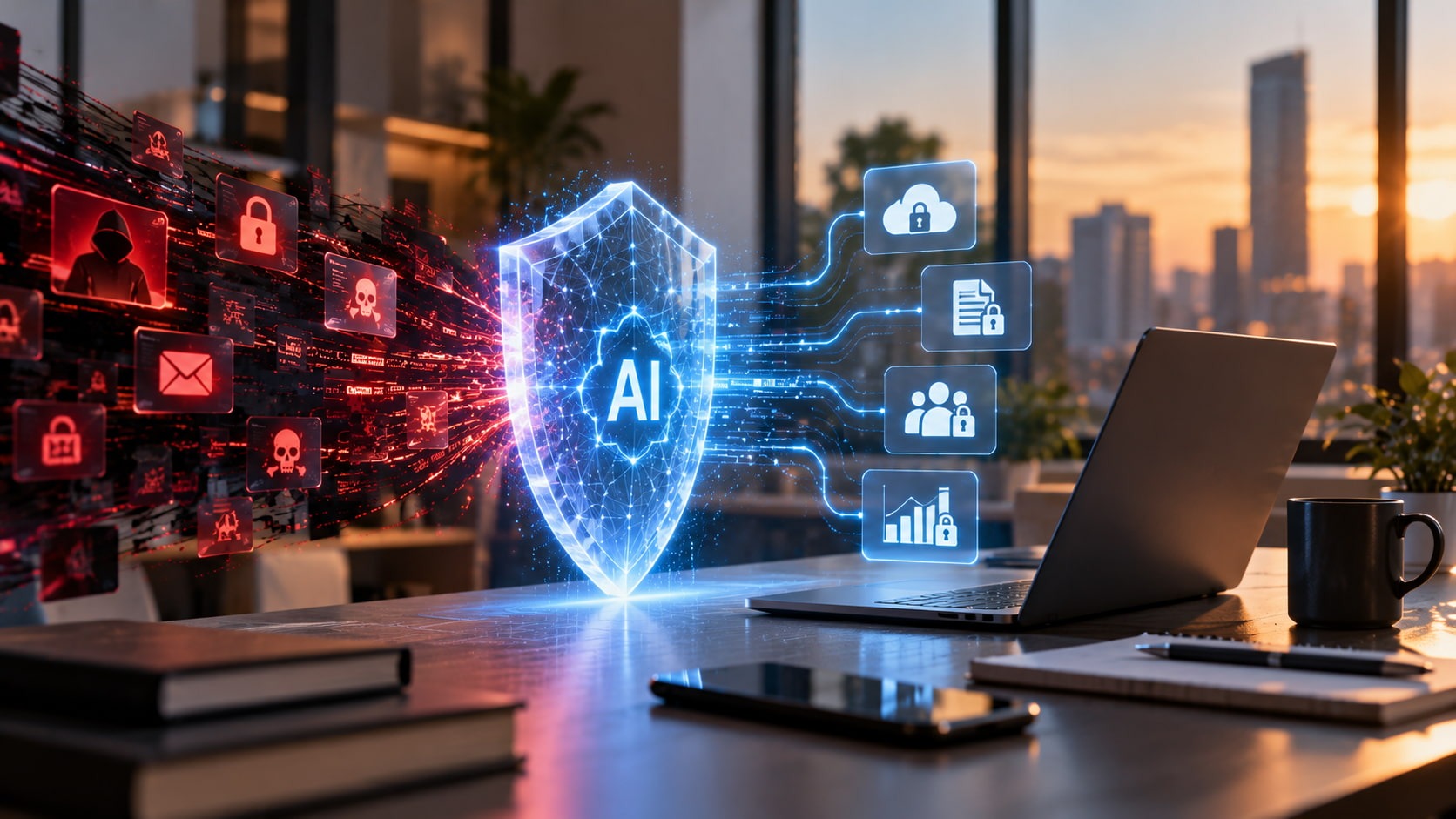
Artificial intelligence is becoming an increasingly important part of cybersecurity. Businesses face phishing, ransomware, credential theft, and attacks on connected systems, while the volume and speed of security alerts can make it difficult for teams to identify the most urgent risks. AI can help analyse patterns, prioritise alerts, and support faster responses, but it must operate within a well-designed security strategy.
Traditional security tools often rely on known indicators and predefined rules. AI-based systems can also examine unusual behaviour across networks, devices, user accounts, and applications. For example, they may flag an unexpected login pattern or identify activity that differs from a user’s normal behaviour. These signals still need context and validation; an AI alert is not automatically proof of an attack.
For businesses evaluating these technologies, ALSoft recommends beginning with clear security priorities, reliable data, and defined response procedures. AI should strengthen the work of security professionals—not replace accountability, sound judgement, or established controls.
How can AI support cybersecurity?
AI can assist with threat detection by analysing large volumes of activity and highlighting patterns that deserve investigation. It can help security teams sort alerts, correlate events from different systems, identify suspicious email characteristics, and summarise incident information. When integrated carefully, these capabilities may reduce repetitive analysis and help teams focus on high-priority risks.
AI can also support incident response by recommending containment steps, gathering relevant logs, or preparing an initial incident summary. Actions that could disable systems, affect customers, expose sensitive information, or interrupt business operations should remain subject to authorised human review.
What should businesses do to prepare?
Start by identifying the systems and information that matter most: customer records, financial data, employee accounts, business applications, and critical infrastructure. Keep software updated, enforce multi-factor authentication, apply least-privilege access, maintain tested backups, and establish a clear process for reporting and responding to incidents.
Before deploying AI security tools, review what data they collect, where that data is processed, how long it is retained, and who can access it. Test integrations and escalation procedures, define which actions can be automated, and make sure employees know how to report suspicious activity. Regular exercises can reveal gaps before a real incident occurs.
Risks and limitations of AI in cybersecurity
AI systems can generate false positives, overlook unfamiliar threats, or produce recommendations based on incomplete data. Attackers may also use AI to create more convincing phishing messages or adapt their techniques. Poorly governed tools can introduce privacy concerns or create new access risks if they are given excessive permissions.
Businesses should therefore combine AI with layered security controls, ongoing monitoring, independent testing, and human oversight. Keep audit records, restrict automated actions to approved scenarios, and ensure staff can stop or reverse an action where possible. AI can improve detection and response, but it cannot guarantee that a system is secure.
How can businesses measure the value?
Assess security tools against practical indicators such as time to detect a threat, time to contain an incident, false-positive rates, investigation workload, and recovery time. Include implementation, integration, training, monitoring, and maintenance costs. Review results regularly and adjust controls as the threat environment changes.
Conclusion: AI must be part of a wider security strategy
AI can help businesses recognise suspicious activity and respond more efficiently, but effective cybersecurity still depends on preparation, sound processes, trained people, and layered protection. The right approach is to identify the most important risks, introduce suitable tools carefully, and evaluate their results continuously.
As Ermal Beqiri of ALSoft emphasises:
“Technology creates the greatest value when it addresses a real risk, supports informed decisions, and keeps responsibility and control clearly defined.”
For organisations considering AI-powered cybersecurity, the practical first step is to review their current risks, strengthen the fundamentals, and pilot AI tools in a controlled environment before expanding their use.